


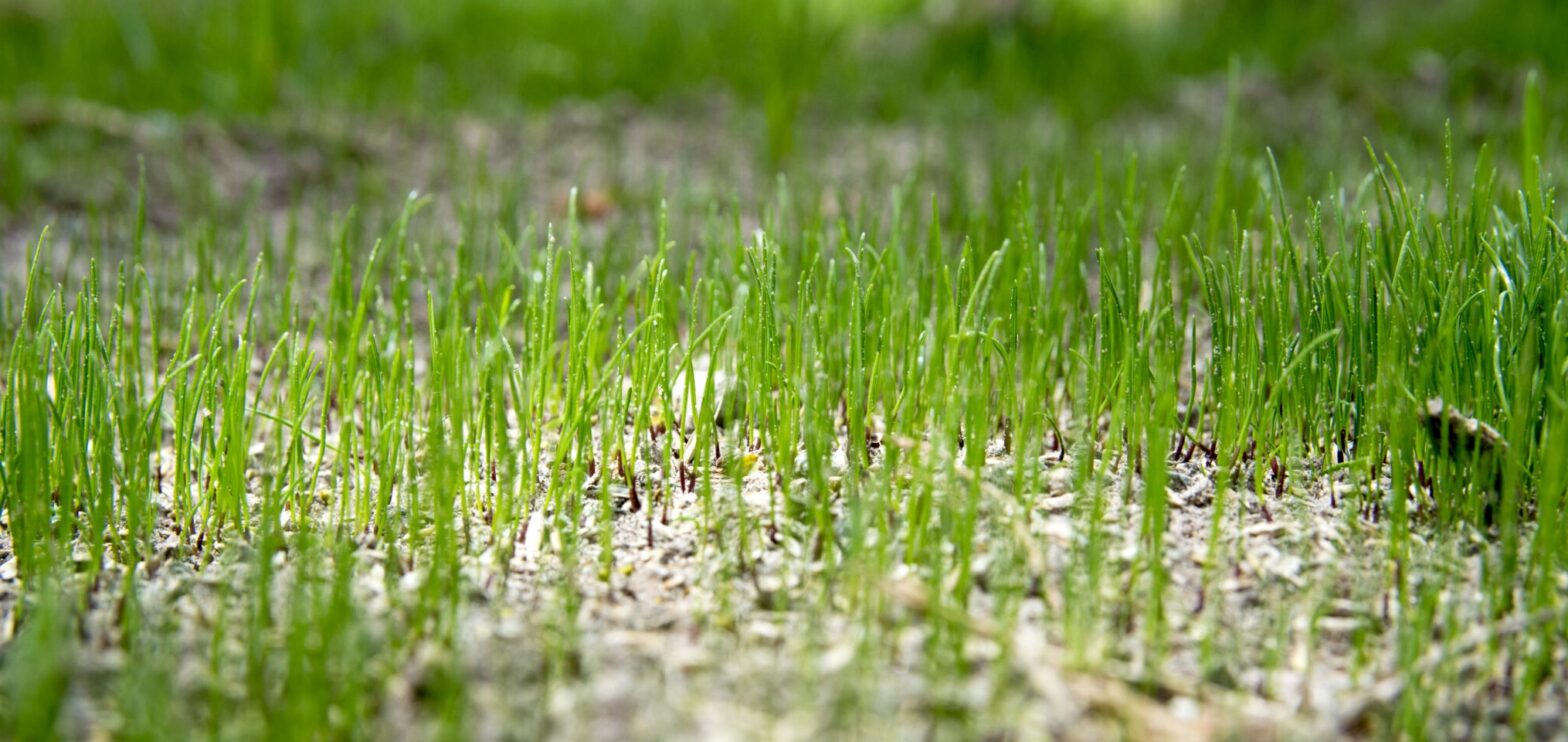
Turning germination into a dense sward
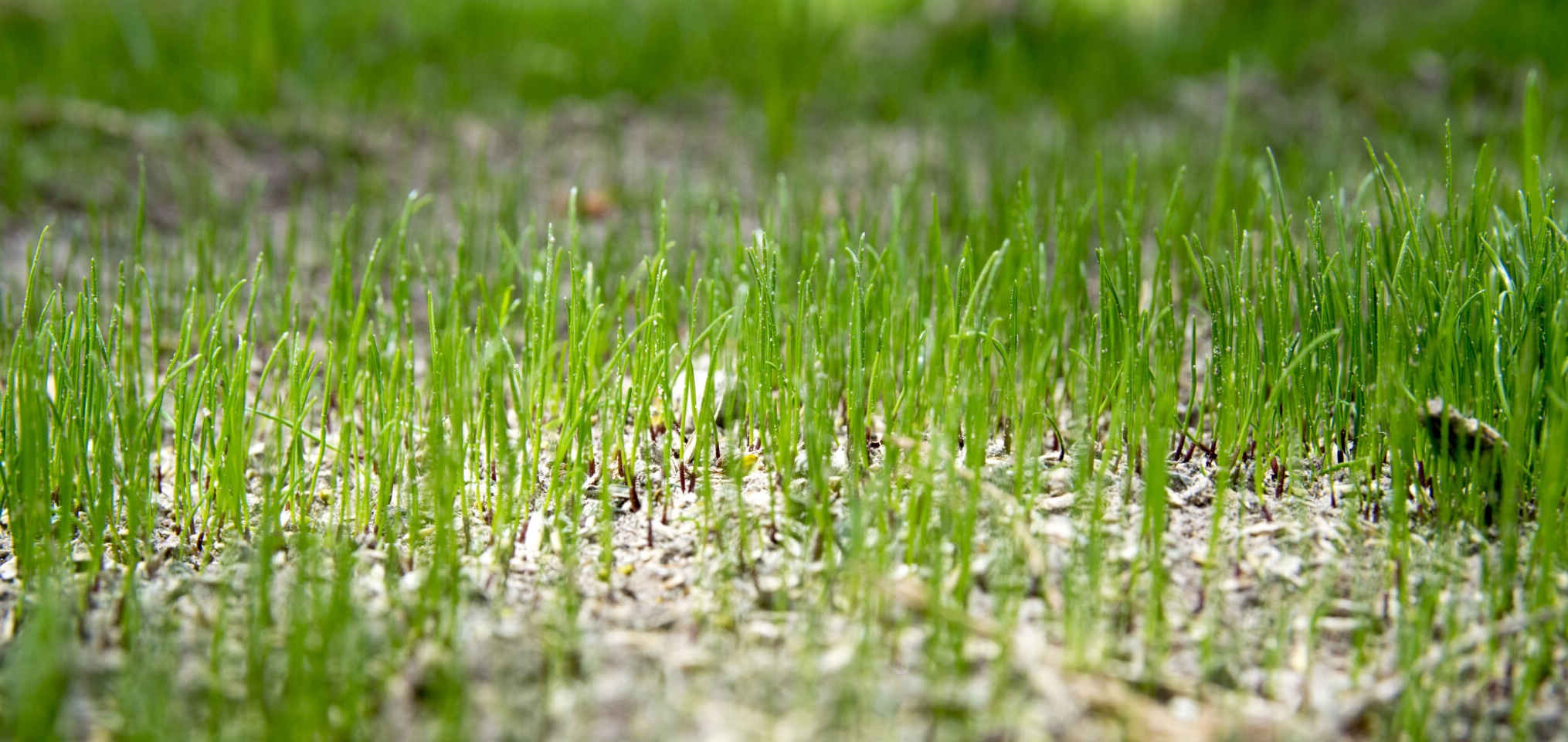
The first part of this blog focused on germination: getting the most out of your seed by getting moisture right. Establishment success is decided by what happens next—how well you manage competition and growth, how effectively you protect vulnerable seedlings, and how quickly you prevent weeds from taking the space you’ve just created.
Read Part 1 here.
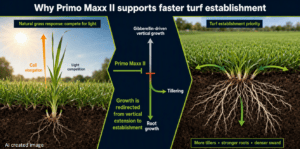
Growth regulators (Primo Maxx II): directing energy where it builds density
When seed costs are high and larger-scale renovation is increasingly common, the goal is simple: convert as much of that seed as possible into a dense, competitive sward.
This is where Primo Maxx II can contribute beyond its more familiar role in established turf.
By reducing competition from existing grasses and suppressing vertical shoot elongation, it helps redirect plant energy toward the traits that matter most during establishment:
- Root development
- Tillering
- Lateral spread
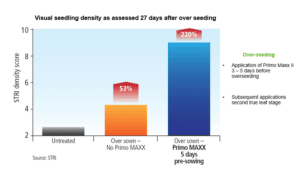
STRI germination work assessing visual seedling density at 27 days after overseeding has shown a clear establishment benefit—supporting the case for including growth regulation as a standard renovation tool when conditions and timing are right.
Timing: the difference between benefit and added stress
Timing changes depending on whether you are overseeding into an existing sward or reseeding into bare ground.
Overseeding
- Apply Primo Maxx II 3–5 days before overseeding to influence the existing sward ahead of seed going down
- Resume applications at the second true-leaf stage of the new seedlings
Reseeding
- Begin applications once 80–90% grass cover has been restored
- Applying too early risks adding stress before seedlings are established enough to benefit
The principle is the same in both cases: regulate growth when it will support establishment—not when it will compete with it.
Seedling disease: why the risk is increasing
Climate shift is creating more frequent periods that are warm and wet during establishment—conditions that can significantly increase the risk of damping off and seedling blight.
The main pathogens involved are Pythium, Fusarium, and Rhizoctonia. Symptoms can develop quickly: seedlings become blighted, collapse, and die in circular or irregular patches. Plants may look water-soaked, and mycelium can sometimes be visible in early morning dew. The challenge is that by the time symptoms are obvious, establishment losses are often already locked in.
Why seedlings are so vulnerable
Several factors combine to make early-stage turf particularly exposed:
- Pythium can remain active across a wide temperature range (about 13–28°C)
- Higher seeding rates used to compensate for drought losses can increase disease development
- The sustained moisture needed for germination also create the prolonged wetness pathogens thrive in
Don’t rely on reaction when disease hits. Seedling protection needs to be built into the renovation plan, because the window between infection and visible loss can be short.
Weed control: protect the space you’ve paid to create
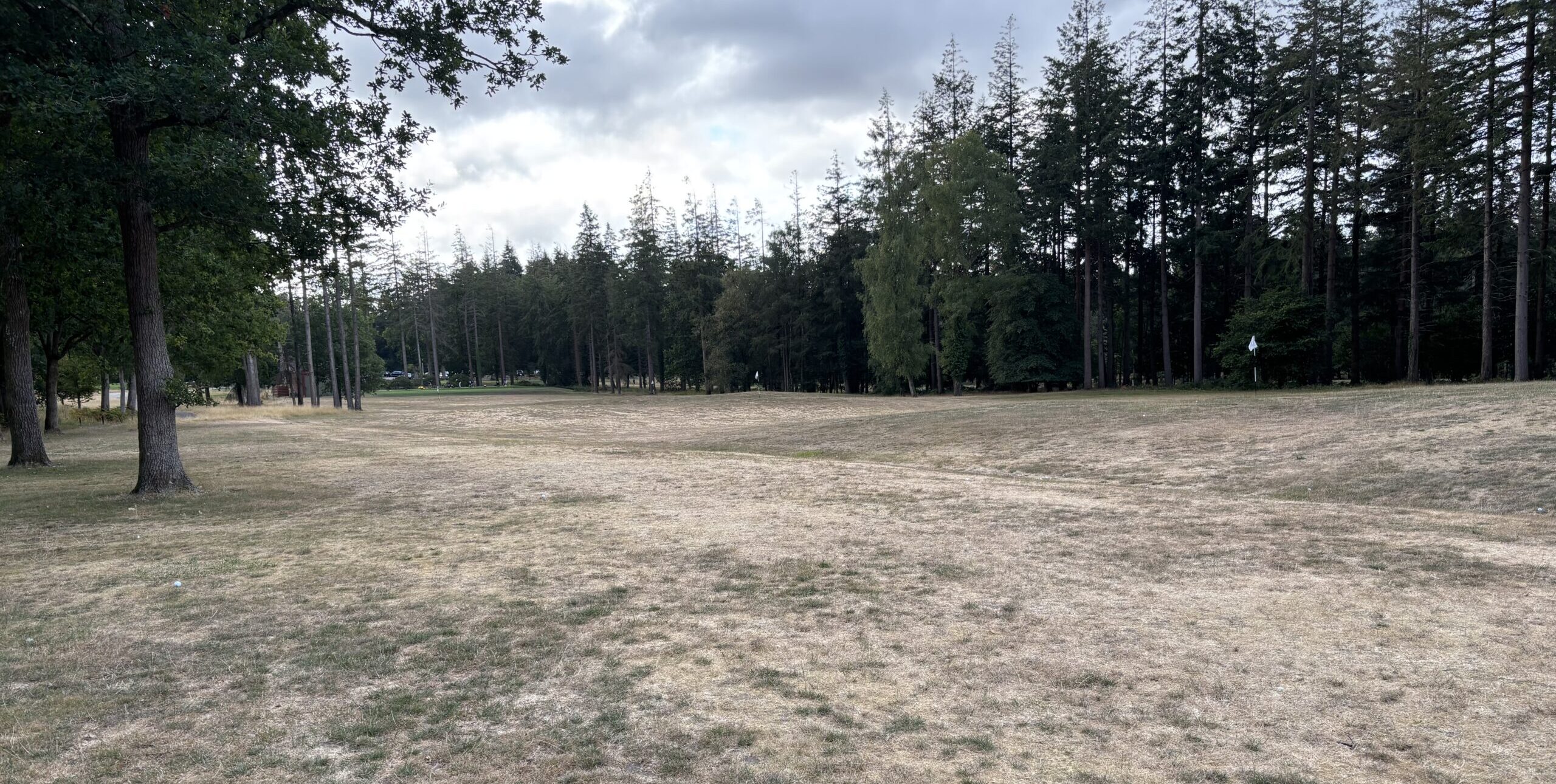
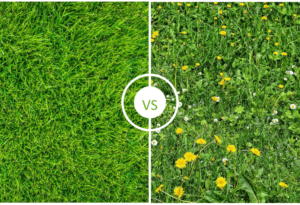
Drought and renovation open the canopy. That space will be filled—either by the grasses you sow, or by weeds that establish faster and compete harder while the sward is still thin.
Warmer, wetter conditions can accelerate germination of annual and ephemeral weeds (plants that produce seeds throughout the season, while an establishing sward offers limited resistance to weed ingress early on. Delaying action until spring often means weeds are better rooted, more competitive, and harder to remove without checking the young turf.
Overtake is available as a post-emergence option approved for use on newly established turf, giving renovation programmes a route to address weed incursion earlier, rather than waiting for full sward maturity.
The timing of weed control is becoming increasingly important for successful sward establishment where competitive weeds continue to grower in milder winter conditions. The principle is simple: the earlier weed pressure is addressed, the less it costs—in product, labour, and lost establishment.
A programme approach
The common thread across this two-part series is that renovation success now depends on connected decisions, not isolated inputs.
- Moisture consistency supports faster, more even germination Link to first blog
- Growth regulation helps turn early plant numbers into density
- Seedling protection reduces the risk of losing plants at their most vulnerable stage
- Early weed control prevents unwanted species taking the space before the sown grasses can compete
When seed is expensive and the margin for error is smaller, a structured programme built around these principles is often the most cost-effective route to a successful renovation.