




However, the reality is more complex. Despite these encouraging temperature trends, DLI (Daily Light Integral) often remains too low to support the growth potential that temperatures might suggest. For info, DLI essentially is a measure of the light available for photosynthesis on any given day.
This creates a challenging scenario, where the growth we hope for never quite materialises, while dormant fungal diseases sit waiting in the scars and the thatch layer, ready to reignite. It’s crucial that we use every tool in our armoury to capitalise on potential growth that may come in waves as temperatures rise.
Having nutrient in the game is fundamental, but there are additional tools available to us.
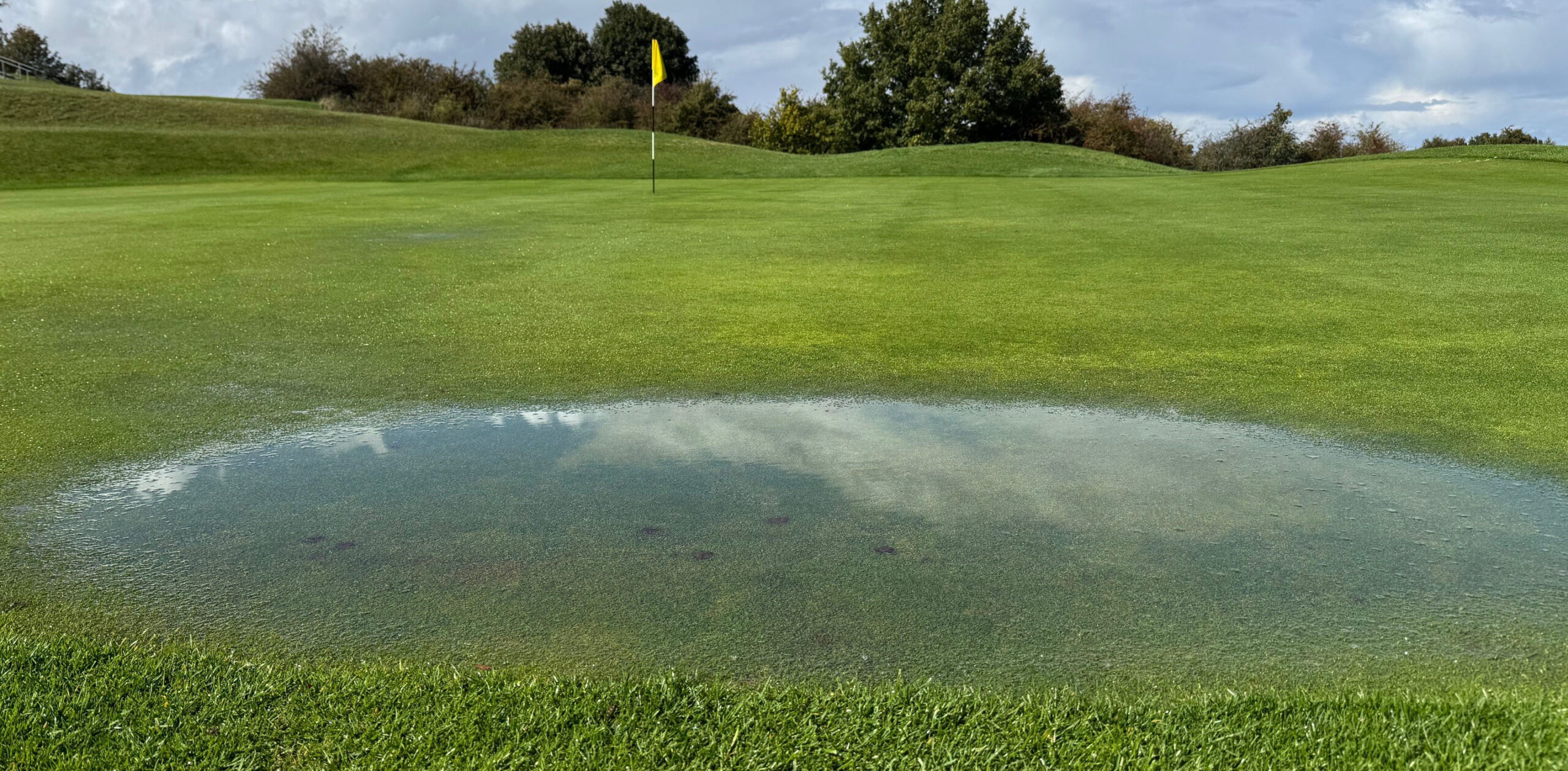
Firstly, to physically get more light to the leaf – removing shade, along with dew that suppresses light transmission. We can also physically increase the leaf area to intercept light with height and frequency of cut, possibly incorporating rolling.
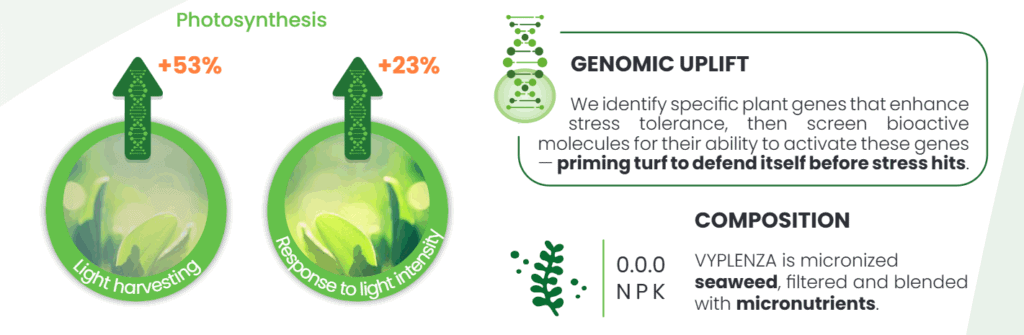
Then, anything that can increase the photosynthetic efficiency of the plant becomes invaluable. Vyplenza, one of Syngenta’s new biostimulants, offers an effective way to utilise every mole light that our DLI gives us. Research on genetic markers demonstrates it can deliver up to 53% increase in activity in genes related to photosynthesis, making it particularly valuable during the winter-to-spring transition.
The role of Primo Maxx II early in the season
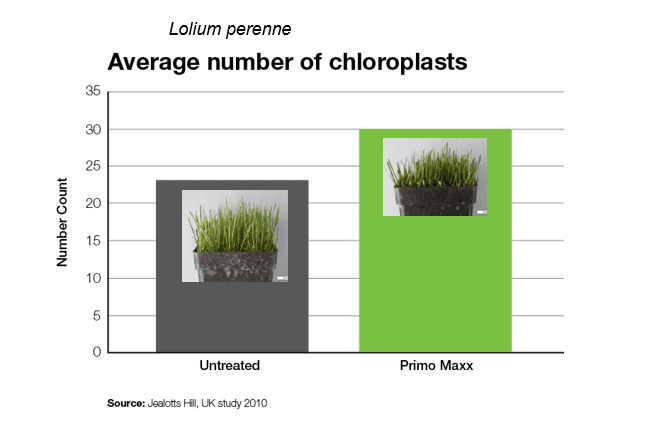
Research has also revealed that turf treated with Primo Maxx II shows increased chloroplast numbers within the leaf. This, combined with Vyplenza’s enhancement of photosynthetic activity, creates a powerful combination for improving light harvesting capability during these early, low-light periods.
The timing of Primo Maxx II applications presents an interesting dilemma. While we naturally want to maximise growth to aid scar recovery, we must also encourage the right type of growth. Plants’ response to low-light conditions and rising temperatures often manifests as cell elongation – a stretching controlled through the gibberellic acid pathway. Although this growth provides length, elongated cells result in thinner cell walls more susceptible to damage and disease, along with reducing the tillering that we want to encourage for surface recovery.
The question of Primo Maxx II timing becomes more nuanced than simply monitoring growth potential and clipping yields
It’s worth noting that Primo Maxx II doesn’t inhibit auxin-controlled growth through cell division to create stronger leaf growth.
There’s a strong argument, particularly for shaded greens, that earlier applications could be beneficial. This approach utilises enhanced light harvesting capabilities, while suppressing the gibberellic pathway, redirecting energy toward desirable root growth, cell division, and tillering.
The key considerations for early season Primo Maxx II applications should include clipping yield and growth potential, but also:
- Severity of winter damage
- Shade patterns across greens
- Historical disease pressure
- Integration with biostimulant programs
- Microclimate variations
By taking this more comprehensive approach to early season Primo Maxx II timing, we can better balance the complex requirements of spring transition while maximising the benefits of our overall management programme.