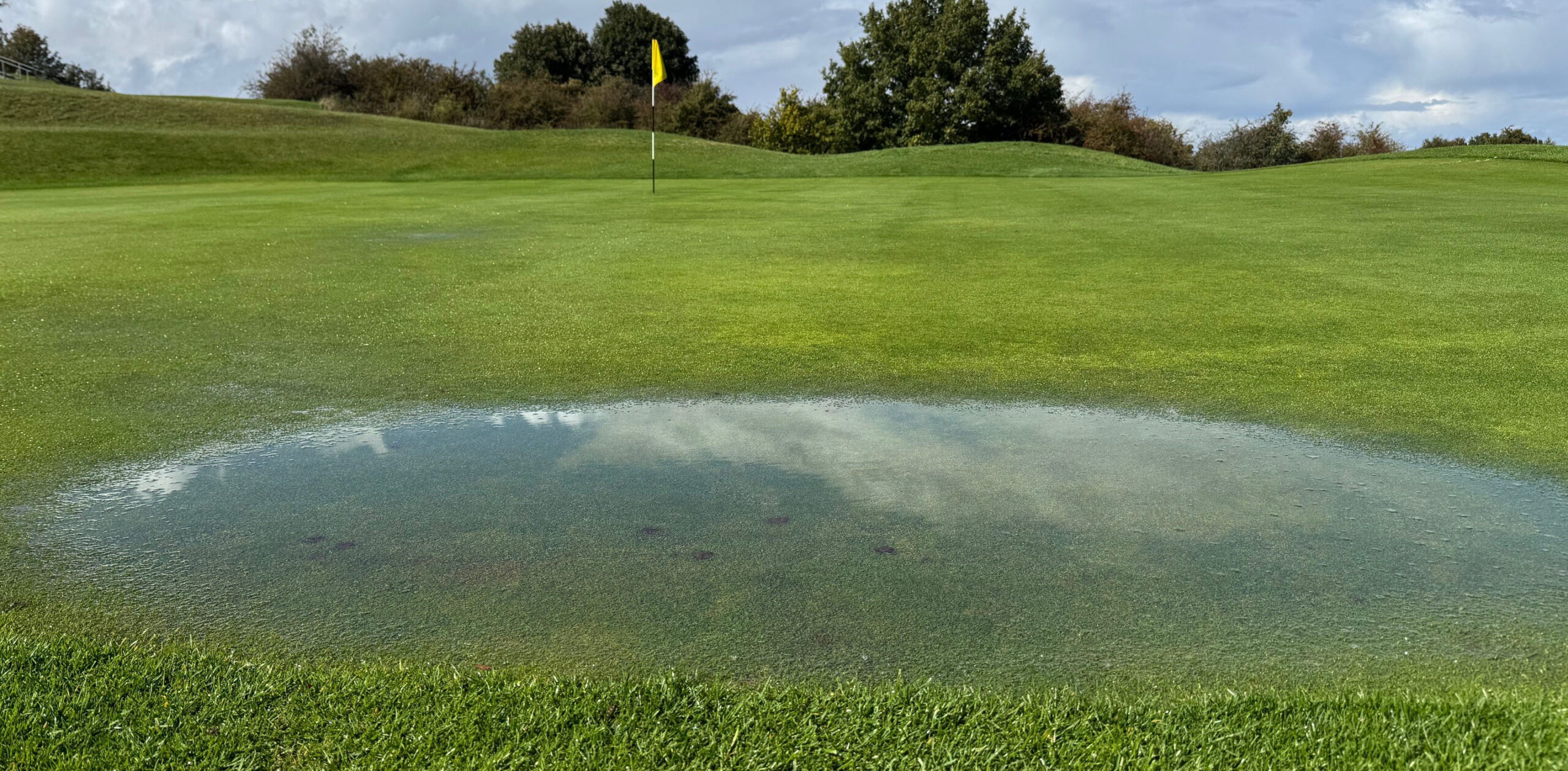




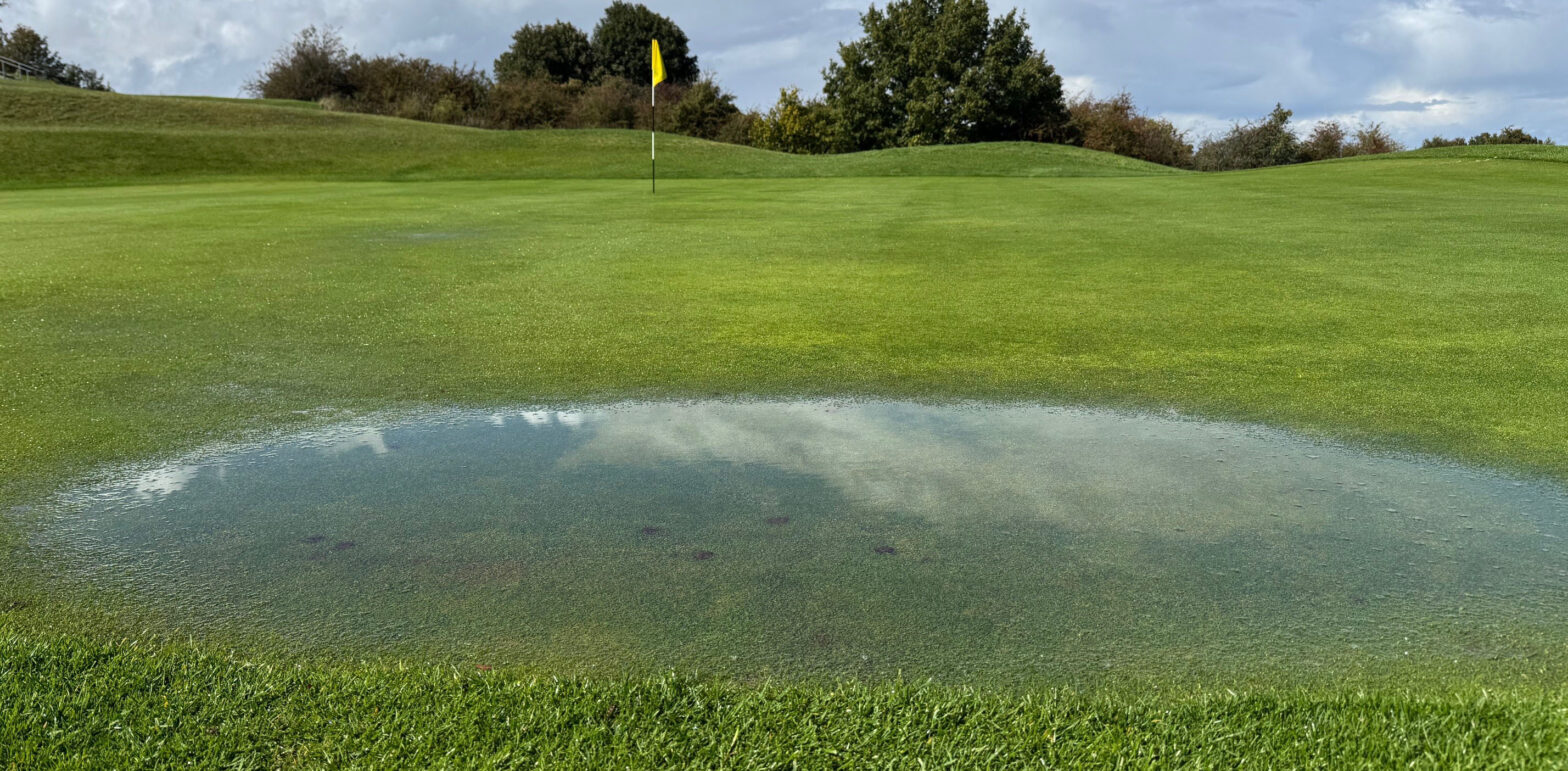
It’s becoming hard to ignore the fact – weather extremes aren’t occasional headaches anymore. They’re the new reality for turf managers.
While we’re currently seeing saturated soils across many regions, experience tells us conditions can shift dramatically in just a few weeks. These swings between excessive rainfall and potential dry spells create a huge challenge for managing turf, while maintaining the higher standards and playability that golfers expect.
Why Moisture Balance Matters
It may seem counterintuitive to discuss wetting agents during this period of extensive rainfall, but these conditions actually highlight their importance. When soil moisture swings between extremes, turf suffers. Current waterlogging can lead to shallow root systems that leave turf vulnerable during drier periods. Growth slows, resilience weakens, and plants become susceptible to disease. Irrigation and nutrient efficiency also decline, making management more difficult and costly.
The solution? Start early, even in wet conditions.
The case for early spring action
So how early should you go with your wetting agent programme? If last year has taught us anything it’s that priming the soil early while we have good moisture content, is essential in a dry spring and prevents the stress of continuously trying to play catch up later in the year – when we are already starting to see the build-up of hydrophobic areas. It is also far easier to get your wetting agent to where it is needed most while there is still moisture in the soil.
However, because of the dual nature of Qualibra – keeping soils drier in wet conditions and conserving essential moisture in the dry – there is still a benefit to be seen in a wet spring.
When you take all of this into account, alongside research which shows that cooler soil temperatures extend the lifespan of surfactant chemistry, there seems to be less and less logic to the wait and see what the weather does approach.
So what is the research showing us
Recent trials demonstrate that combining a dynamic penetrant with a polymer retainer is highly effective. This dual approach moves excess rainwater away from the surface during wet periods while retaining moisture deeper in the soil during dry spells.
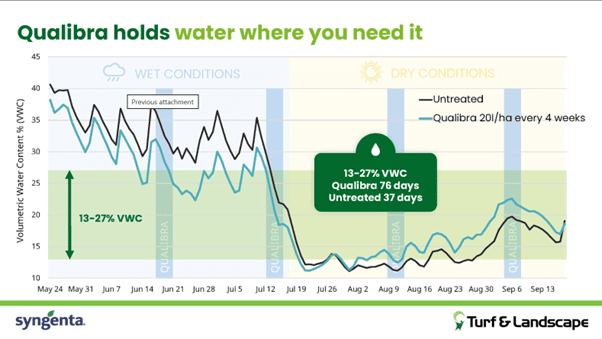
– During extreme wet conditions, Qualibra-treated turf maintained optimal soil moisture for 21 days vs 0 days for untreated
– During subsequent drought, treated areas stayed in target range for 45 days vs. 37 days for untreated
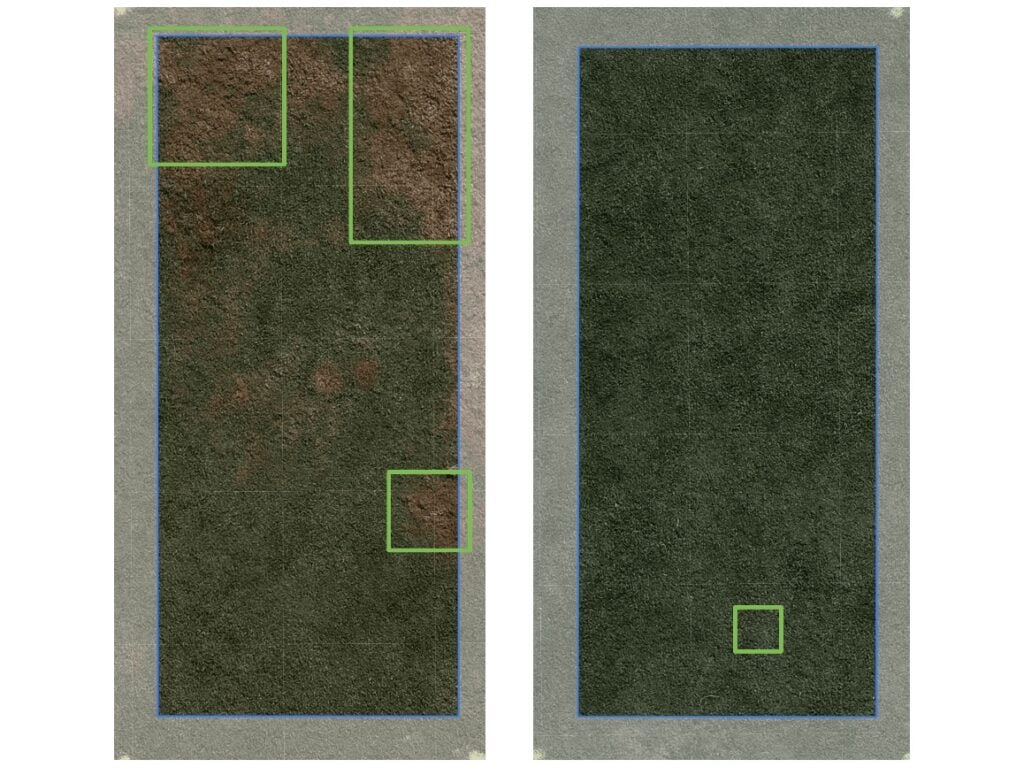
Drone imagery showed treated turf (right) was up to 10% more efficient at photosynthesis than the control (left)
Avoiding the hydrophobic trap
Relying solely on pure penetrants early in the season carries risk. Stripping moisture too quickly can create hydrophobic soils that repel water, causing runoff, dry patches, and uneven playing surfaces that recover slowly.
A season-long Qualibra programme – from early spring through to late autumn – prevents this by maintaining even moisture distribution that enhances turf health and the capability to cope better with seasonal stress points.
The Bottom Line
Managing Current Wet Conditions While Planning Ahead
While many courses are currently dealing with flooding and saturated soils, Qualibra’s dual-action technology is already proving its worth by helping move excess water away from the surface. As we look ahead to potentially drier conditions, having this system in place will be crucial for maintaining optimal moisture levels and preventing the formation of hydrophobic soils when conditions change.
In an era of weather extremes, being proactive with moisture management is essential to give your turf the resilience it needs to perform all season long.