


The big talking point
I think it’s fair to say dollar spot dominated many of the conversations and it’s not hard to see why. The conditions we’re dealing with now, exacerbated by our changing climate are creating the perfect storm for disease pressure. We’re seeing extreme weather events becoming the norm rather than the exception, and our turf is paying the price.
Weed issues are intensifying; water management is becoming increasingly complex and the stress on turf is now just a constant.
The climate reality check
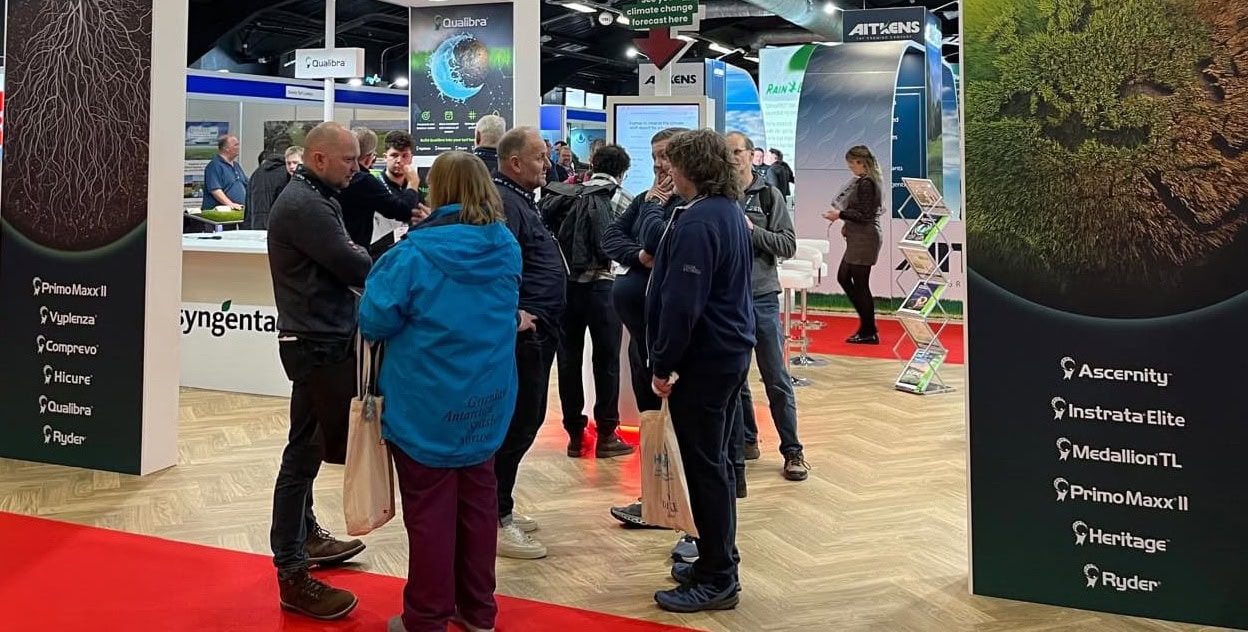
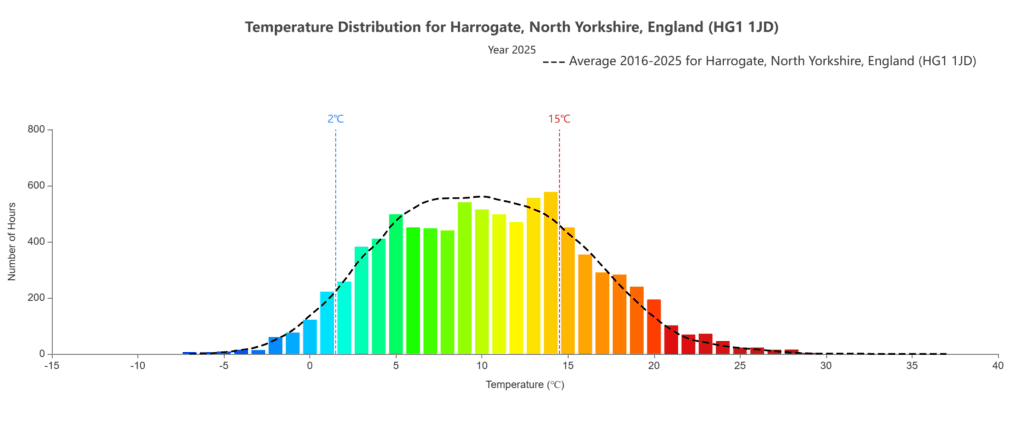
We unveiled our new climate modelling tool at the show and the data it’s showing is very sobering for disease pressures, when you look at the direction of travel:
- We’re spending less time in those sub 2°C safe periods
- More time in the Microdochium danger zone
- Increasingly, we’re seeing extended periods above 15°C that’s prime territory for summer diseases like anthracnose, dollar spot, and brown patch
It’s happening now but the trends show the pressure will only intensify.
The Smith-Kerns revelation
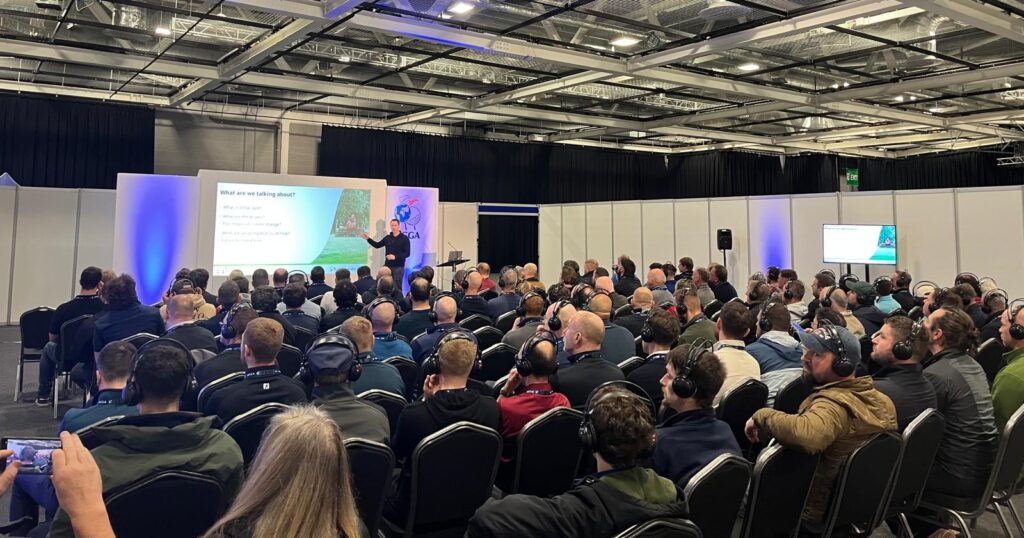
Our European Technical Manager Sean Loakes delivered a presentation to a packed room on dollar spot that really got me thinking. He talked about disease prediction models, specifically the Smith-Kerns model, but not in the way we usually hear about it.
What struck me is we may have been using these models to rigidly.
We’ve treated them like absolute laws “spray at 20% Smith-Kerns” as if that threshold is universal and fixed, but it’s not. It varies from course to course, and more importantly, you can influence it.
Your grass cultivars matter. Your rolling program matters. Your Integrated Turf Management strategies matter. Your stress mitigation practices matter.
All of these things can shift your actual risk threshold. The model gives you guidance. Your management practices, cultivars and local environment determine where your threshold sits and whether this can be shifted up or down.
The space between
The climate data is showing us fewer safe zones of prolonged cold periods where disease development stops or even recedes.
Traditional chemistry remains absolutely essential, but we don’t always have the budget, or products, to spray all year round. We need to keep damage at acceptable levels, within the constraints of what we can control
So where does that leave us?
It leaves us with everything we do in between.
Wetting agents; bio-stimulants; cultural practices; cultivar selection. All those things we might have previously thought of as “nice to have” or “marginal gains” are not marginal anymore, they’re essential.
With the fundamentals in place, we need to squeeze every last drop of value from these technologies. Not because they replace fungicides, they don’t, but because they can help us delay the need for treatments, reduce disease severity when it does hit, and retain that level of turf quality we’ve worked so hard to build.
The age of incremental gains
That’s my big takeaway from BTME this year. We’re in an age of incremental gains.
First get your fundamentals right: drainage, nail your nutrition, optimise your mowing. Then layer in the wetting agents, add the bio-stimulants, fine tune your rolling program, choose resistant cultivars and monitor your stress indicators.
None of these things alone will save you. But together? They might just buy you enough time, enough resilience, enough breathing space to maintain the quality your members expect through those increasingly common stress periods.
It’s just … everything, all at once, done as well as you possibly can.