





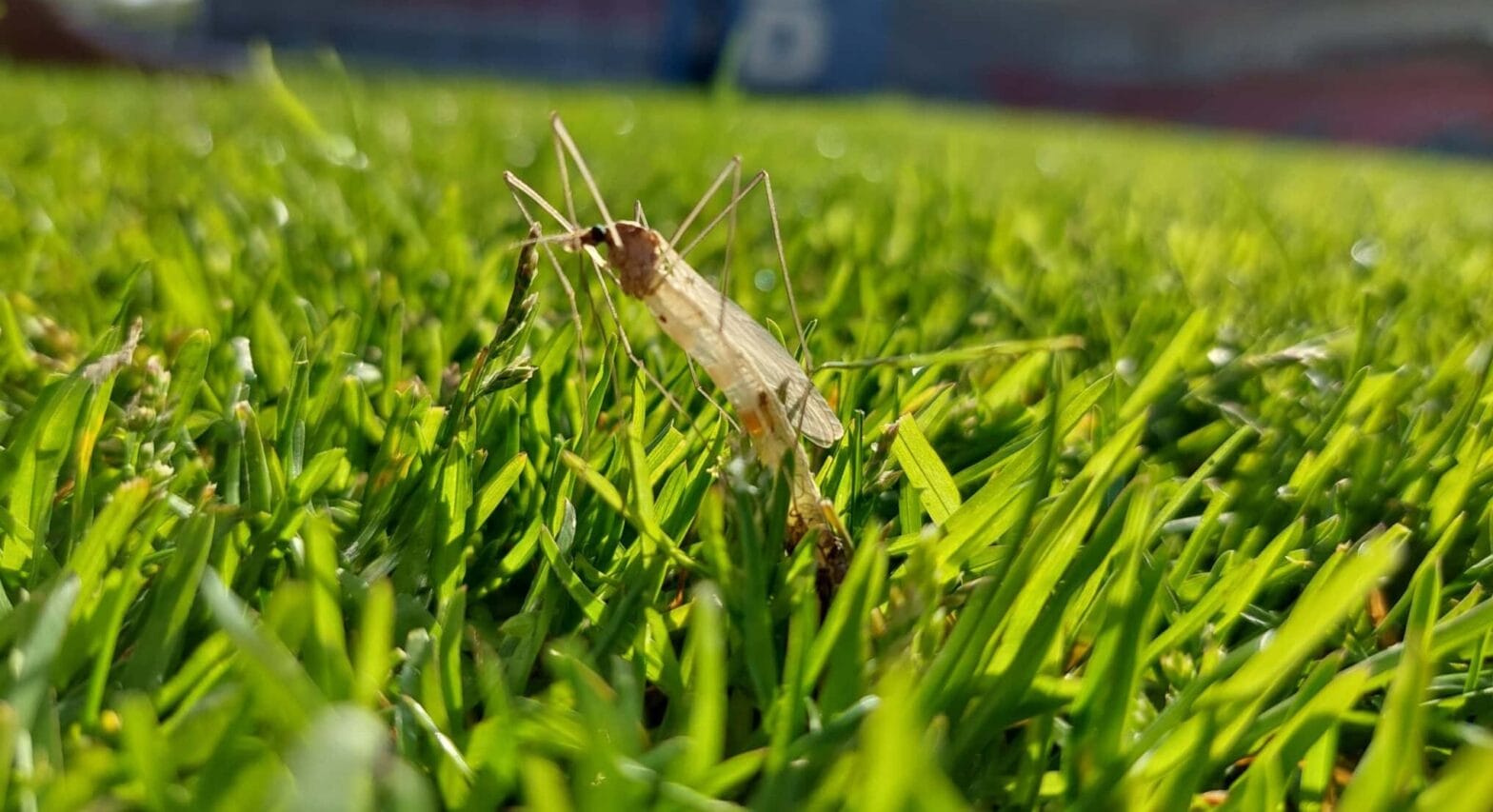
We’ve already had a little nudge that the next crane fly (daddy long-legs) cycle is underway. Many of us saw the smaller cousin of Tipula paludosa, Tipula oleracea (the marsh crane fly), on the wing a month or two ago. That’s your reminder, what happens this autumn is what decides how much pain you’re going to experience next spring.
What’s going on under the surface right now?
With the hot, dry spells we’ve had, leatherjackets will often sit deeper in the profile, where there’s moisture and protection. As soils re-wet (rainfall and/or irrigation), they can move back up and get active again. We’re moving into the period where populations are progressing toward pupation and adult emergence.
The big flight is just around the corner
The main headache for UK turf managers is the autumn flight window, where we can see Tipula paludosa and Tipula oleracea overlapping.
So the message is simple: plan now, while you’ve still got time to book the slot, line up product, and get your application conditions right.
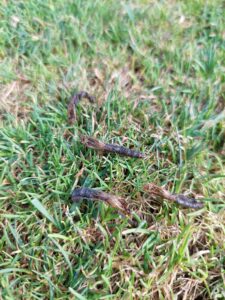
LTAP is back: the Leatherjacket Total Approach Programme
Over the next couple of weeks we’ll be talking a lot about our Leatherjacket Total Approach Programme (LTAP)—a joined-up plan using:
- Acelepryn as the foundation (timed to target the most vulnerable stage), paralysing the grubs so;
- NemaTrident beneficial nematodes, steinanema feltiae, are able to locate and target grubs giving greater reliability and consistency of leatherjacket control.
