


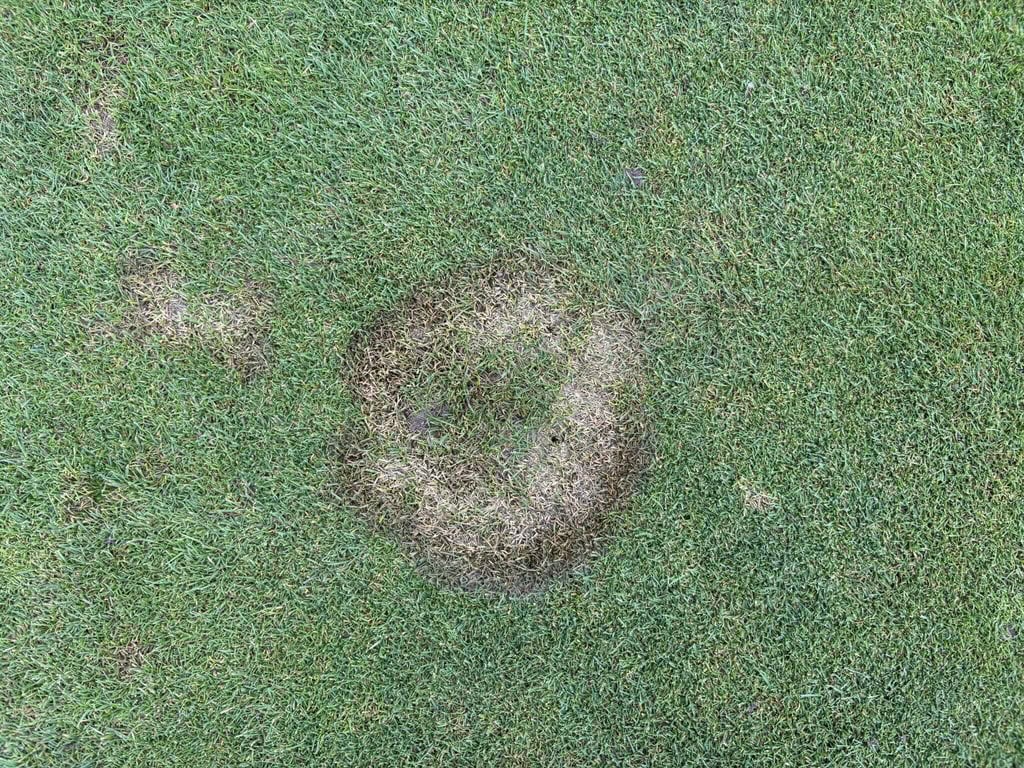
The earlier part of this autumn served as a stark reminder of just how quickly disease pressure can escalate. Entering the season, many surfaces were already on the back foot in terms of plant health following a stressful summer. Compounding this, milder conditions created an overlapping disease landscape: on more than one occasion, I witnessed anthracnose encroaching directly onto the margins of dollar spot scars, at the same time as Microdochium patch raised its ugly head.
Where we are now: Falling temperatures and continued pressure
As temperatures begin to drop, Microdochium nivale takes centre stage. With plant growth slowing down, turf recovery rates diminish rapidly. This makes waiting for visible scars a costly mistake, at that stage, you are dealing with an established infection on grass that cannot readily grow out the damage.
Anticipating disease pressure and timing fungicide applications before extensive symptoms appear is critical. However, as disease windows become less predictable, sticking to fixed calendar-based sprays is no longer practical or efficient.
Using Turf Advisor for better decision-making
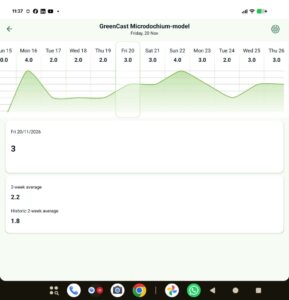
This is where decision-support tools like Turf Advisor prove invaluable. The Microdochium disease model uses temperature and rainfall data to highlight periods when environmental conditions favour infection, giving an early indication of rising pressure.
However, no model should be used in isolation. To get the most out of Turf Advisor, it helps to understand its inputs and limitations:
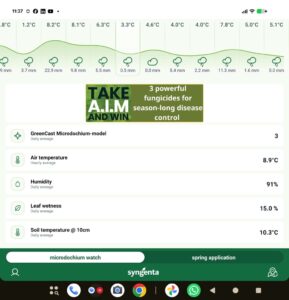
- Watch leaf wetness and relative humidity: The core model does not factor in leaf wetness duration or ambient humidity. If the model indicates moderate risk, but you are experiencing cool temperatures paired with prolonged leaf wetness and heavy morning dews, the actual microclimate risk on the leaf surface is significantly higher.
- Combine metrics on your dashboard: Keep temperature, rainfall, relative humidity, and leaf wetness visible alongside the disease model. Looking at these collectively provides a far more accurate picture of conditions out on the course.
- Targeted scouting: When these metrics trend into high-risk territory, use that data to drive targeted scouting on historical indicator greens or low-lying, sheltered pockets where airflow is poor.
The bottom line
Successful disease management heading into winter is about merging digital forecasting with personal experience and scouting. Turf Advisor helps pinpoint when the biological door is opening for infection, enabling you to select and time appropriate fungicide applications with precision while growth slows.
By taking an informed, risk-based approach rather than relying on the calendar, we can protect surfaces through high-pressure periods and ensure healthy, clean turf heading into the winter months.