




Why the “Total Approach” works
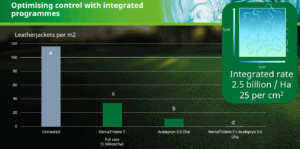
- Acelepryn is all about hitting leatherjackets when they’re young and vulnerable.
- NemaTrident adds a biological mode of action that can strengthen overall performance.
- Used as a planned sequence, you’re stacking complementary tools rather than relying on one lever.
Timing: treat the flight, not the damage
By the time you’re seeing obvious turf damage, you’re usually chasing the problem—often when larvae are bigger and harder to knock back, Soil temperature is often two low in early spring for nematodes to be effective.
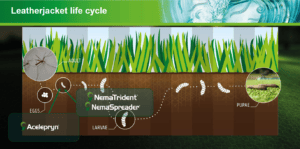
Acelepryn timing is critical. The label position is to apply at peak flight. The challenge is that cranefly flight can be stop-start and spread over weeks, so picking the “best” day isn’t always straightforward.
What we see consistently in practice:
Applications around mid–late October, often toward the back end of peak flight tend to deliver the most reliable results (around the 20th of October).
Follow with NemaTrident—don’t leave it too long
If you’re running LTAP, plan to apply NemaTrident within 7 days of Acelepryn. That’s the window when Aceleypryn has paralysed grubs and soil temperatures are still high enough for effective nematode treatment
Temperature matters for nematodes. Build your plan around a forecast that keeps soil temperatures above 8°C for at least two weeks after application, so they can keep working.
Target the right areas first (you can’t treat everything)
Most sites have their usual suspects for leatherjacket activity; often shaded, wetter greens. Under UK label constraints you can only treat 10% of your area with Acelepryn, so be ruthless with priorities:
- greens and surrounds first
- historically damaged fairways/approaches
- high-value playing surfaces
- edges and adjacent zones that can act as sources
A useful reminder: leatherjackets can move over winter, so treating surrounding areas can help reduce pressure creeping back in.
Set yourself up for success on the day
A few practical points that make a difference:
- Book the slot for your LTAP now (orders have to be in advance to plan nematode production and delivery)
- Make sure you’ve got everything ready for NemaTrident (delivery, storage, kit, staff time)
- Avoid piling on extra turf stress around the application window (major disruption, drought stress, etc.) Irrigate ahead of application if required and possible.
- Keep an eye on soil moisture and temperature – especially for the nematode part of the programme